My Research
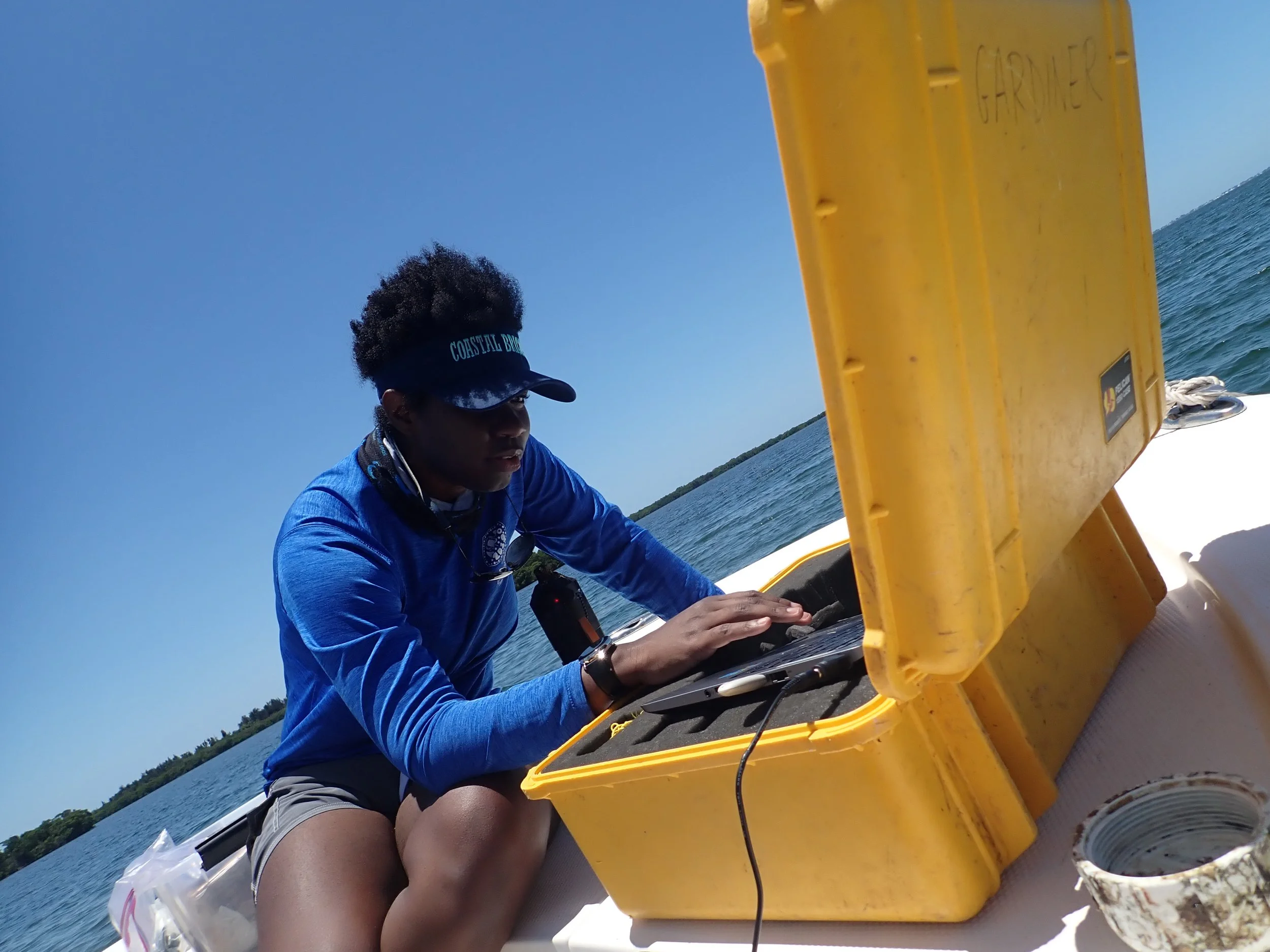
I am broadly interested in conservation biology, particularly the conservation of coastal species. In my current research, I am using satellite and acoustic telemetry to track the movements of sharks and rays. I am interested in the interface between science and policy and much of my work deals with understanding and mitigating anthropogenic effects on elasmobranchs. My work is interdisciplinary and often employs social science practices and leverages local ecological knowledge.
Research Themes
-
Mitigating Threats to Shark Species
Through my research I explore threats to coastal shark species. Currently my focuses are 1) the effects of Harmful Algal Blooms (HABs) on shark species, 2) understanding the impacts of warming ocean temperatures on shark reproduction and 3) understanding and mitigating accidental fisher interactions
-
Local Ecological Knowledge
I’m interested in exploring how scientists can leverage local ecological knowledge to understand the dynamics of fish populations. Furthermore, I am interested in developing a model for collaborative monitoring and management of coastal fisheries
-
Retention of Scientists from Underrepresented Communities
I conduct research to better understand what the barriers are to participation of Black, Indigenous and People of Color in marine science. I am also interested in quantifying the impacts having a diversity of voices has on the marine science and conservation fields
Featured Publications
Starting a Dialogue: Understanding the Knowledge, Attitudes, and Values Related to Fisheries Management of a Black Fishing Community in Myrtle Beach, South Carolina
Jasmin Graham, Sidney Graham, Kathy Liu and Julia Wester / Journal of Integrative and Comparative Biology/ 2025
There is a lack of understanding of how fishing regulations are made as well as a lack of local community trust in policy makers. Communities, particularly communities of color, often feel their interests and challenges are not taken into consideration when potentially disruptive environmental changes are made like dredging and beach renourishment, and they feel they bear a disproportionate amount of the burden of environmental regulations. Overall, the socioeconomic pressures, fishing regulations, and continued systemic oppression these communities face have led to a severe decline in the ability of the cultural practice of fishing to be maintained, and many fear this practice will not be passed on to the next generation. This is of particular concern for communities with a high rate of poverty. We surveyed five fishers in a Black fishing community in Myrtle Beach, SC. The purpose of this study was to understand fishers’ attitudes toward conservation, local ecological knowledge, and values related to preservation of fish stocks. This project was co-led by a longstanding member of the fishing community, which allowed us valuable access to unbridled and uncensored discussions with community members. One of the biggest takeaways from the study is that the fish that the community relies on are becoming increasingly scarce.
Commercial fishery bycatch risk for large juvenile and adult smalltooth sawfish (Pristis pectinata) in Florida waters
Jasmin Graham et al. / Aquatic Conservation: Marine and Freshwater Ecosystems/ 2022
Incidental catch of marine species can create ecological and economic issues, particularly for endangered species. The smalltooth sawfish (Pristis pectinata) is endemic to the Atlantic Ocean and listed as Endangered in the US Endangered Species Act. One of its major threats is bycatch mortality in commercial fisheries. Despite the protection afforded by the US Endangered Species Act, smalltooth sawfish are still captured as bycatch in commercial fisheries. Acoustic and satellite tag data collected on 59 sawfish between 2011 and 2019 were analysed to assess commercial fishery bycatch risk for large juveniles and adults off Florida. This study focused on shrimp trawl, south‐east coastal gillnet, and shark bottom longline fisheries, as these were identified in the recovery plan as having the greatest potential threats to recovery. Bycatch risk associated with the shrimp trawl fishery was significantly higher than the other fisheries, indicating that this fishery currently poses the greatest threat to recovery. Bycatch risk was concentrated in all seasons in the Gulf of Mexico adjacent to the lower Florida Keys for the shrimp trawl fishery, off Cape Canaveral in the south‐east coastal gillnet fishery, and in the Atlantic Ocean adjacent to the Florida Keys in the shark bottom longline fishery. Tagging location and sex were predictors of bycatch risk. Individuals tagged in Charlotte Harbor had the highest shrimp trawl bycatch risk. Females tagged in south Florida tended to reside in the deepest water, which is where shrimp trawl effort is highest. Therefore, females may be at more risk in these deeper waters. Results from this study indicate a year‐round closure of waters off south‐west Florida to the shrimp trawl fishery between Charlotte Harbor and the western Florida Keys would reduce sawfish bycatch, and thus mortality, which is in line with recovery plan goals.
BIPOC voices in ocean sciences: A qualitative exploration of factors impacting career retention BIPOC voices in ocean sciences: A qualitative exploration of factors impacting career retention
Jasmin Graham, Gina Hodsdon, Aly Busse and Michael Crosby / Journal of Geoscience Education/ 2022
The aim of this study was to understand the factors that impact the recruitment and retention of scientists that identify as Black, Indigenous or as People of Color (BIPOC). A total of 47 BIPOC participants who are currently working or have worked in the field of marine science were recruited using a non-probability snowball sampling method to participate in semi-structured interviews which were analyzed using Astin’s Input-Environment-Output framework and Social Cognitive Career Theory. Several interventions which have been put in place to address the systemic issues that have led to the exclusion of certain groups including BIPOC-focused programs, research experiences and mentorship were identified as having positive impacts on the cognitive-personal outcomes of sense of belonging (feeling of acceptance within a group), science identity (the self-categorization of one’s self as a ‘science person’) and self-efficacy (belief in one’s ability to succeed). Several factors including discrimination, lack of allyship and negative research or mentorship experiences were identified as factors that greatly reduce these cognitive-personal outcomes. In addition, all three interviewees who left the field of marine science mentioned research experiences where they felt unsupported as a contributing factor to them leaving the field. This study serves to exemplify that systemic issues that have been observed in other STEM fields exist in the ocean science field as well. The study uses a novel framework to present and analyze trends in the experiences of BIPOC ocean scientists around the world.