

Frequently Asked Questions
-
I am available for in-person and virtual speaking events for both K-12 students and adults. I’m also available to be a science consultant for film, TV and books if you need an expert to ensure scientific accuracy. In addition, I’m open to TV and film appearances and providing written or visual content related to shark and ocean conservation or diversity in STEM. Lastly, I provide workshops and training on mentorship, inclusive research practices, ally skills, grant writing and science communication.
-
I recommend learning as much as you can about your interest areas and follow you curiousity, whether that’s taking classes, reading books, watching documentaries or finding online resources to learn more, building an understanding of the science topics you are interested in can provide a solid foundation. Next connect with people working in the field. If you are in college go to office hours, if you have a relevant club on campus, try to join. If there are opportunities for internships or to assist with lab/field work, get involved! Remember that every person you meet can become part of your professional network, so work hard and make sure people know what you are interested in so they will recommend you or invite you for opportunities.
-
I get these requests frequently, but unfortunately I don’t have the capacity to do interviews for school projects. But down below I will provide the answers to most of the questions you probably have:
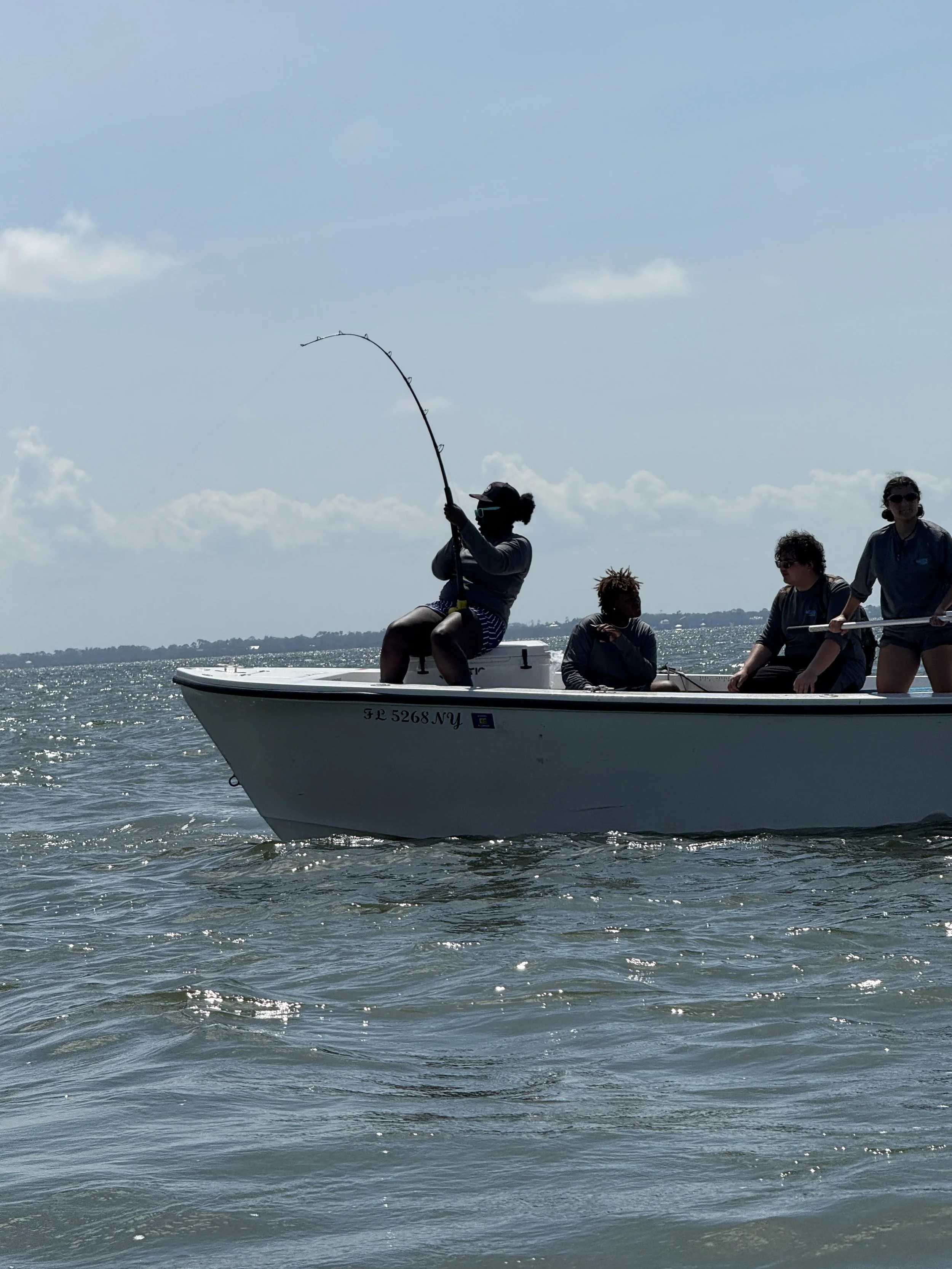
I grew up in South Carolina and attended College of Charleston for undergrad where I received a B.S. in Marine Biology and a B.A. in Spanish with a minor in linguistics. I started studying sharks after meeting a professor at C of C after (literally) running into him in the hallway and glancing at some of his papers as I was helping to pick them up. I started asking about his research and sharks and the rest is history. After I completed undergrad I got my Master’s in Biological Science from Florida State University where I studied the critically endangered smalltooth sawfish. My favorite shark is a bonnethead shark because it is the first shark I ever got to work with in the wild, they are cute and they eat sea grass and were the first sharks discovered to be omnivorous. My favorite part of my job is being out on the water. The ocean is my calming place and anytime I get to spend on the water helps center me. If I had to give advice to people interested in being a scientist I would tell them to follow their curiosity and see where it leads them, there is no “right” path to becoming a scientist.
-
You can reach me anytime via my contact form and I will try to get back to you as soon as possible. Please use the form to contact me about workshops, speaking engagements, outreach events, media inquiries and collaboration opportunities.
-
In my talks I can cover any (or a combination) of the following:
My career journey
Sharks 101: A masterclass all about sharks
Issues facing ocean health
Inclusive fisheries management and ocean conservation
Overview of my research
Deep dive into my book, Sharks Don’t Sink
Equity in marine science and STEM
Local Ecological Knowledge
My workshops can cover anny (or a comination) of the following:
Understanding Privilege and Power
Tips for building Ally Skills
Improving accessibility in research programs
Understanding and mitigating bias
Developing your voice in science communication
Successful Grant Writing
Note: I can customize talks and workshops for each audience’s needs
-
I have worked with corporate clients, universities, K-12 schools, non-profit organizations and public libraries. I am open to working with folks of all ages, backgrounds, interests and geographic locations
-
Prices vary, but generally speaking for in-person events outside my local area (Tampa, FL) it’s a minimum of $5,000 to cover travel, lodging, food and honorarium. Virtual event pricing can be lower depending on the event and organization. In the name of accessibility, I do take on pro-bono and low-bono projects for groups with smaller budgets, particularly those serving underserved youth. Day rates for filming or consulting vary based on production, please reach out to discuss further.
-
Science communication isn’t just about sharing information—it’s about creating experiences that stick. I blend storytelling, lived experience, and rigorous science to make complex topics accessible, engaging, and relevant to everyday life. My work centers people as much as it does the science, highlighting how environmental issues intersect with culture, community, and equity.
I also take an interdisciplinary approach, pulling from film, theatre, and hands-on learning to meet audiences where they are—whether that’s through immersive activities, interactive discussions, or visual media. Rather than a one-size-fits-all presentation, every program is intentionally designed to resonate with the specific audience in the room.
At the core, my goal is to move people from awareness to action—so they don’t just understand the science, they feel connected to it and empowered to do something about it.
-
Absolutely! Anyone interested in Local Ecological Knowledge, shark movement ecology, environmental impacts on sharks, community-led conservation or increasing representation in STEM fields should definitely reach out to see how we can collaborate.