
An Ode to Fishermen
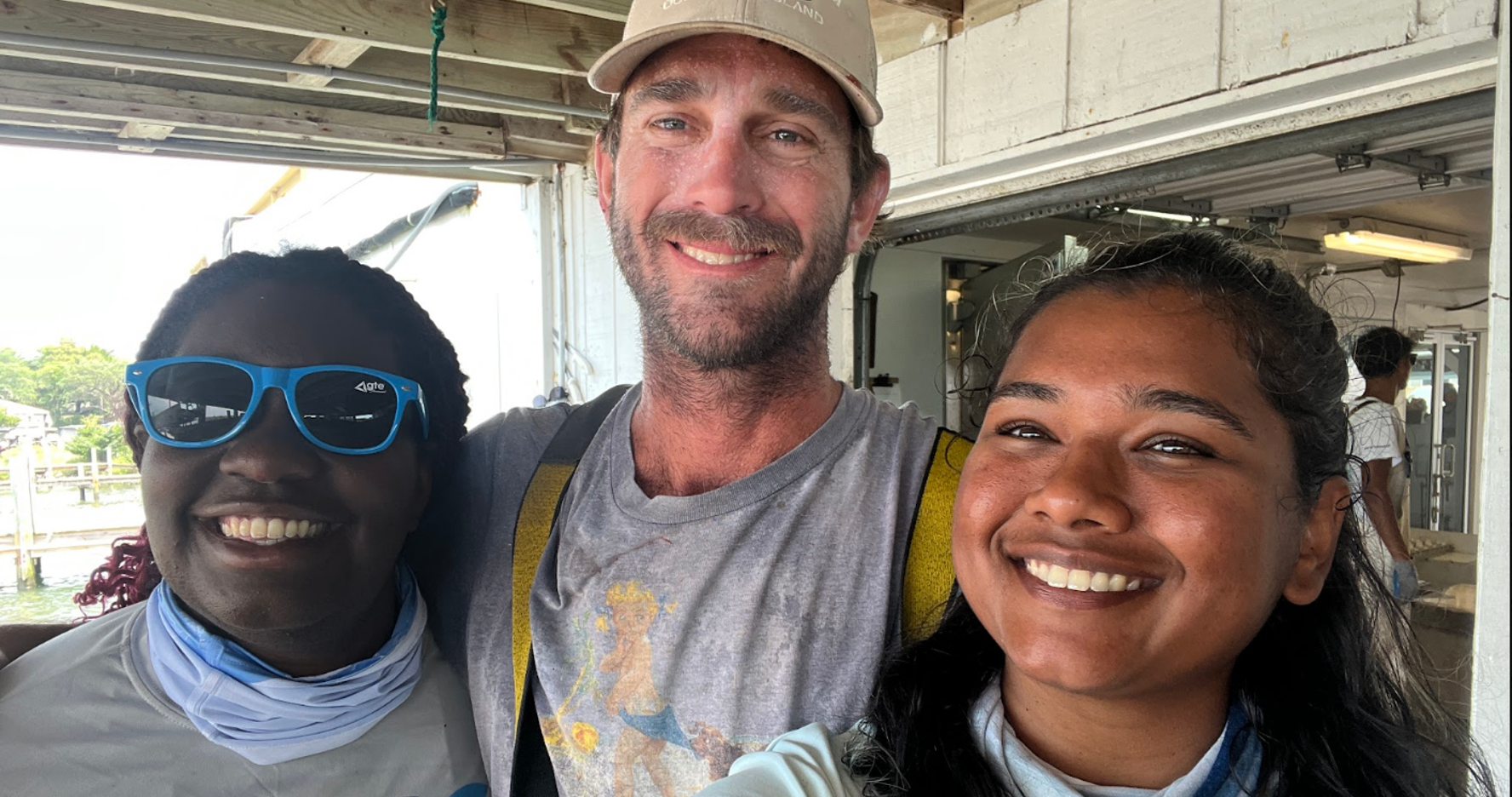
Myself and another scientist standing with one of her fisher friends, Dylan
Just recently we had the pleasure to go up to North Carolina to tag pregnant bull sharks. It’s a project that is very special to me because it wasn’t my idea. It came to be because of a community of people whose curiosity led them to reach out to us. It isn’t grant funded (yet), but the result of crowdfunding and sponsorships. This is the type of community-centered and community-driven science that my work is all about. Since starting the project I have gotten to connect with land-based shark fishers — charter captains that take clients out to fish for sharks and commercial shark fishers , as well as divers and other ocean users. It’s been an amazing and enriching experience to get to connect with all of these stakeholders. The experience has enforced even more what I know to be true. We are all on the same team. We all want healthy oceans, we all want thriving coastal communities, we all want to do what we love and we all want to feel safe (physically and financially). The process has involved a lot of listening and learning. Everyone I have talked to has had so much to share with me, not just about sharks, but about their fears, their frustrations, their challenges. They have asked me questions, many of which I couldn’t provide the answers to, but have incorporated into the ever expanding project.
Today I want to share the biggest lessons I’ve learned from them so far because, unfortunately, the scientific community and conservation field have done a great disservice to some of our greatest allies in our fight to live sustainably with our oceans: fishers. Many of you know I come from a long line of fishers and so this is a group of stakeholders who will always hold a special place in my heart. However, early-on I realized, not everyone in my field felt that way. Many times fishers are villanized and treated as the problem instead of holders of solutions. Understandably, throughout this process I had to do a lot to build trust and earn respect with a group of people who often have had really negative interactions with scientists. It’s one of the reasons I felt truly honored when fishers introduced me as not just a “scientist I work with,” but a friend. Because we are people first. This is a story about people; people who love and respect sharks. First, I had the pleasure of meeting a captain named Chip years before starting this project on Twitter after reading his story about releasing what would likely have been a record breaking hammerhead because he felt it was more important for that beautiful shark to keep swimming the coasts than any accolades he would get. We started chatting and he taught me everything I needed to know about catching sharks on rod and reel so I could buy the appropriate gear for the new project. I’ve had the pleasure of co-presenting on a panel at a workshop and he has been an invaluable font of information, which he has been gracious enough to share with me over the last couple of years. I also met Brian, a land-based fisher I had the pleasure to chat with over a day of shark fishing who told me all about the gear he uses and the standards he holds himself to when fishing for sharks. These standards are far higher than what is required of him, but he feels it is necessary to ensure the sharks well-being. For him and other land-based fishers in North Carolina, sharks are treasured. They fish to see these animals up close and connect with them in nature, and do so in the best way they know how. There are Facebook groups with strict rules and guidelines for fishing that you have to acknowledge and agree to just to join. There is a structure of accountability and self-policing like I have never seen before, and…it is EXTREMELY effective, in my opinion, far more effective than the state law enforcement in getting folks to comply. The vast majority of this community are dedicated to releasing healthy, strong sharks. In fact, Brian was initially skeptical of our tagging and ultrasounding of the sharks because of concerns for the animals well-being. Once he saw the sharks were able to swim off strong and healthy, he warmed up to the idea of working with us. I am so glad he held us accountable for what we were doing and questioned every aspect of our techniques and equipment because that level of concern serves as a reminder of how sacred and special these animals are, which goes beyond data and ecological value. I also got to work with Jeremy, a charter captain who reminded me of the importance of joy. This is a man who truly loves what he does. Jeremy knows the waters he has been working in like the back of his hand. He knows what fish are where. He knows by the direction the wind is blowing if it’s going to be a good day of fishing or a bad day of fishing. He reminds me of what my grandmother taught me: to read the ocean. I'm forever grateful for the wisdom he has imparted on me and the joy he has brought me. Lastly, Dylan, a commercial shark fisher who reminded me that the politics and negotiations that happen in state capitols and Capitol Hill have real and immediate impacts on fishers and that sometimes these decisions don’t always make the most sense. It was a reminder to always hold policymakers accountable to following the best available science, including social sciences. Ecological, economic and social data must all be factored in when decisions are made and key stakeholders, especially small-scale fishers, deserve a seat at that table when decisions are made. Those who don’t have the power, access or money to bend political will are often the ones left holding the bag and that’s just not right. But we can do better. We can amplify the voices of those being drowned out. We can remember that there are people impacted by decisions and we can remember that everyone has a story worth listening to. I leave you with this: anyone can point a finger and put the blame on someone else, but to truly learn to sustainably exist on this shared planet of ours, we need to stop pointing fingers and looking for enemies and start looking for allies because we should all be on the same team, Team Ocean.